 C&N industrial Group, pipe, fitting and flanges manufacturers,fbe epoxy and pe coating for pipeline since 1991,with brand C&N huitong ,C&N hongcheng.
Sandblasting is one of the most widely used surface treatment processes in the field of industrial metal pipe fittings. It propels abrasives onto the workpiece surface at high speed via power equipment, and completes surface cleaning and morphology modification through the impact and cutting effects of abrasives. Whether for anti-corrosion pretreatment of carbon steel pipe fittings or matte surface finishing of stainless steel pipe fittings, the sandblasting process plays an irreplaceable role. It is a core procedure that guarantees the surface quality of pipe fittings, improves the adhesion of subsequent coatings, and extends the service life of products.

I. Core Functions of the Sandblasting Process
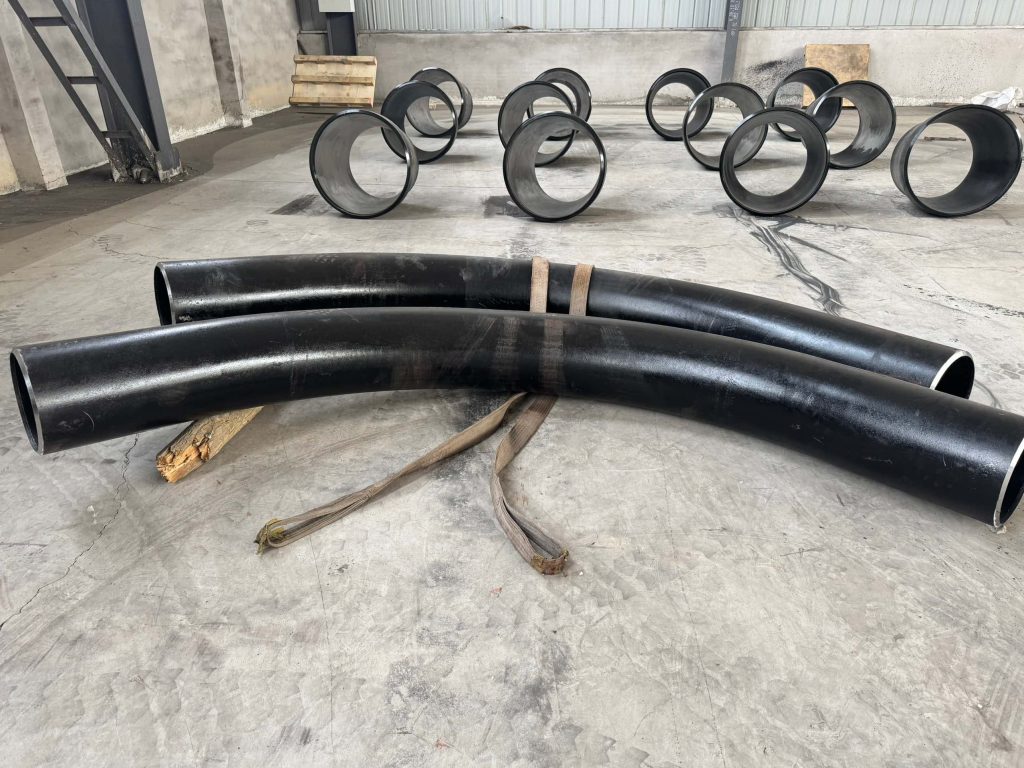
1. Thorough Surface Cleaning and Defect Removal
Sandblasting can efficiently remove mill scale, rust layers, welding slag, grease and other attachments on the surface of pipe fittings, while grinding off burrs and flash edges on the workpiece. It exposes the pure base metal body, eliminating hidden corrosion sources on the surface from the root.
Specialized abrasives can be selected for different materials: quartz sand, steel shot and steel grit are mostly used for anti-corrosion pretreatment of carbon steel; glass sand and quartz sand are commonly adopted for stainless steel pipe fittings, which present a uniform gray matte appearance after treatment.
2. Formation of Surface Anchor Profile and Improvement of Coating Adhesion
Sandblasting forms a uniform micro-rough texture (surface roughness / anchor profile) on the metal surface, greatly increasing the specific surface area of pipe fittings. This enables subsequent anti-corrosion coatings, electroplating layers and other finishes to form a strong mechanical interlock with the substrate, significantly improving the bonding strength of the coating and preventing peeling and flaking. It is the core support for the widely recognized maxim in the anti-corrosion industry: “70% of anti-corrosion performance relies on pretreatment”.

3. Improvement of Surface Performance and Product Durability
Sandblasting and similar processes such as barrel blasting / shot blasting can eliminate tiny internal stress on the surface of pipe fittings, and improve surface hardness and wear resistance. Meanwhile, they can smooth the edges and corners of pipe fittings, reduce stress concentration, enhance the overall mechanical stability of pipe fittings, and prolong the service life of products in actual working conditions.
II. Standard Construction Procedures of the Sandblasting Process
1. Pre-Construction Preparation
Surface pre-cleaning: First inspect the appearance of pipe fittings before sandblasting, and remove grease, welding slag, spatter, flash edges and burrs on the surface in advance.
Abrasive selection and preparation: Select the type and particle size of abrasives according to the material of pipe fittings and treatment objectives, and ensure that the abrasives are dry, clean and free of impurities.
Equipment inspection and commissioning: Check the condition of equipment such as air compressors, sandblasting tanks and nozzles, and confirm that pressure vessels are compliant and safety protection devices are in good condition. Adjust the compressed air pressure to ensure the air source is dry and oil-free, and the oil-water separator works normally.
 Mechanical grinding, surface preparation
 Quality control marking, pipe bevel
2. Formal Sandblasting Operation
Parameter setting: Adjust operation parameters according to the specifications and curved surface structure of pipe fittings.
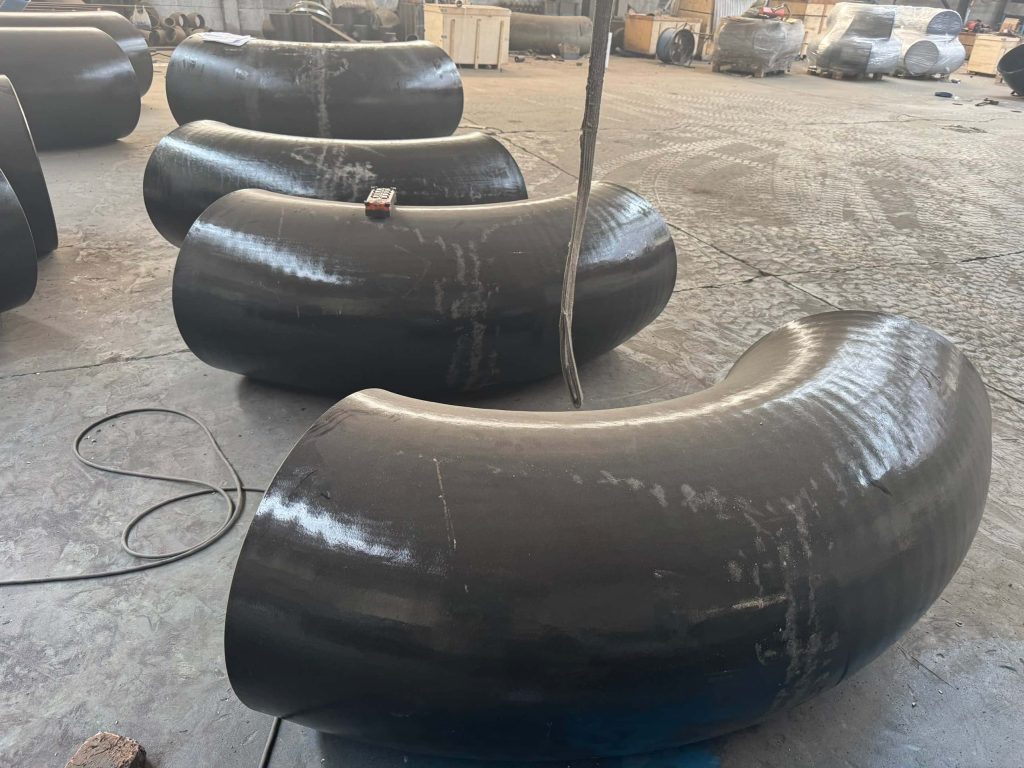
Standardized operation: Move the nozzle at a constant speed during operation to avoid over-blasting caused by staying at the same position for a long time. For curved pipe fittings such as elbows and bends, focus on treating dead corners such as inner arcs, weld seams and inner walls. Replace special angle nozzles or rotary nozzles when necessary to ensure no missed blasting areas.
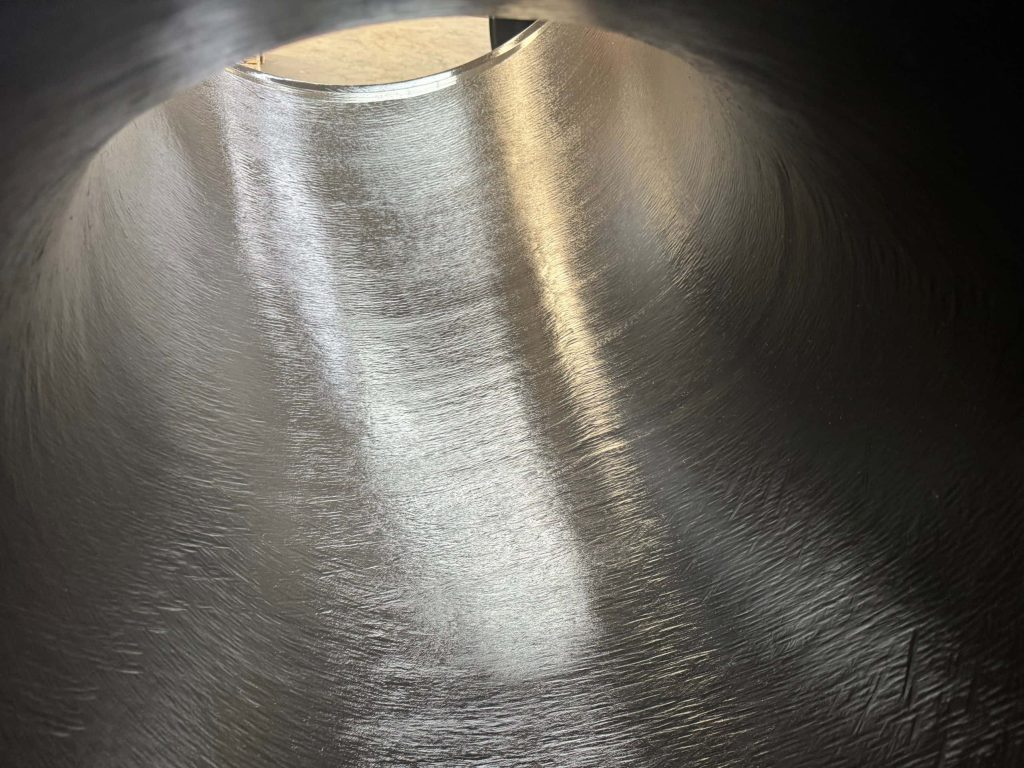 The internal surface of the pipe fitting after sandblasting
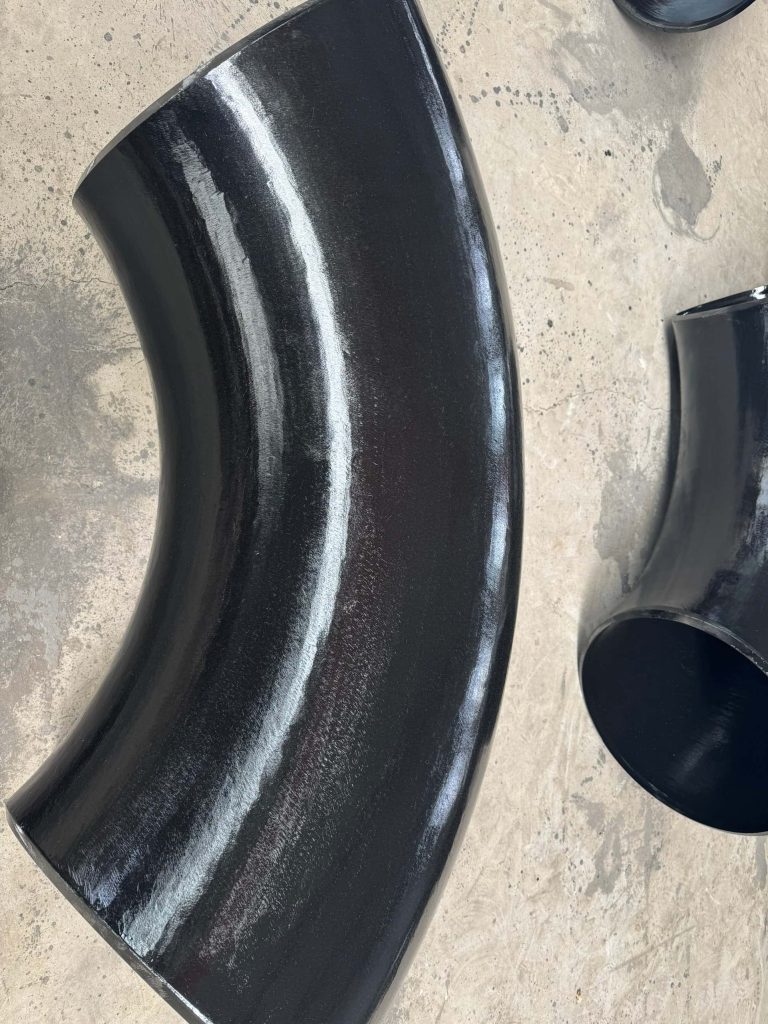
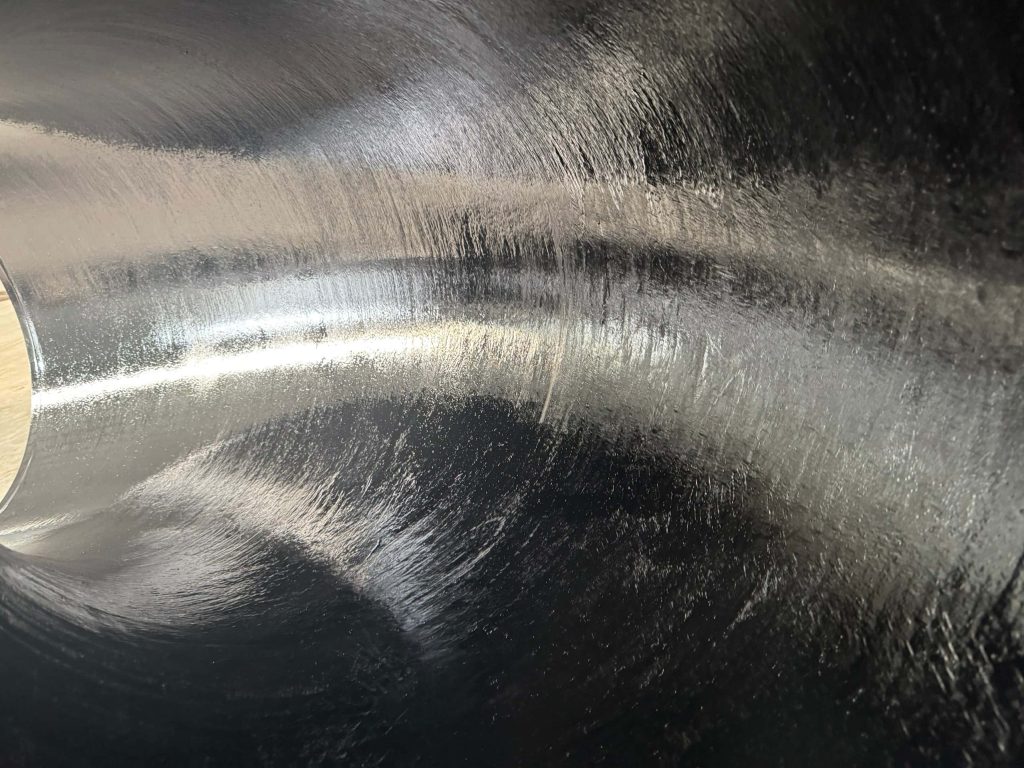 The internal surface of the elbow after sandblasting
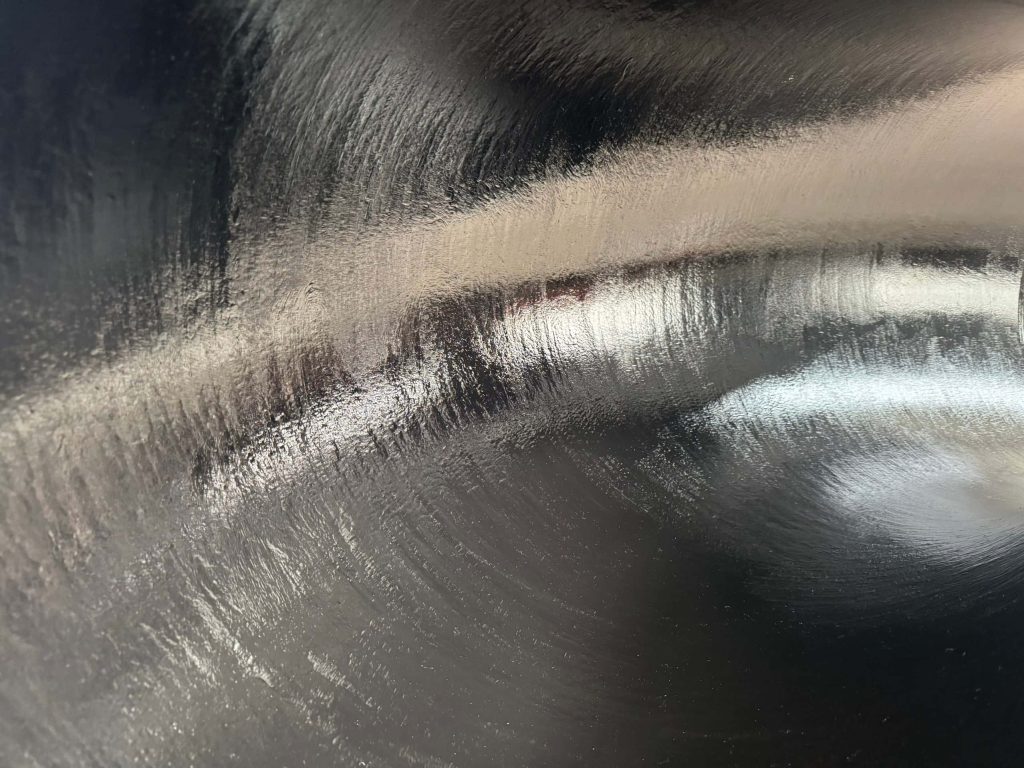 The internal surface of the elbow after sandblasting (2)
3. Post-Treatment and Quality Inspection
Surface dust removal: After sandblasting, blow off residual abrasive dust on the surface of pipe fittings with dry and clean compressed air to avoid residual pollutants affecting subsequent processes.
Quality acceptance: Inspect two core indicators against standards: First, cleanliness. For carbon steel anti-corrosion pretreatment, it shall reach Grade Sa2.5 (near-white blast cleaning), with no visible grease, mill scale or rust on the surface, and only uniform and faint spot-like discoloration remaining. Second, roughness, which shall match the requirements of subsequent coatings. It is strictly forbidden to touch the treated surface with bare hands during inspection to prevent secondary contamination.
 sandblasting control in coating application
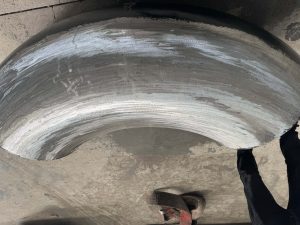 surface sand blasting repairation
III. Key Precautions for Sandblasting Construction
1. Environmental Condition Control
The construction site shall monitor the ambient temperature, relative humidity and workpiece surface temperature daily, and calculate the dew point of the day. During sandblasting operations, the ambient temperature shall be above 5°C (corresponding measures shall be taken when the temperature is below 5°C), the actual temperature of the substrate surface shall be 3°C higher than the dew point temperature, and the air humidity shall not exceed 85%. Construction is prohibited in rainy, snowy or dewy weather to prevent flash rust on the treated surface.
2. Abrasive Quality Control
Sift the recycled abrasives in the pipeline regularly to remove broken fine particles and impurities, so as to ensure stable abrasive particle size. Abrasives contaminated by grease shall be completely discarded and shall not be reused, so as to prevent contamination of the workpiece surface and impairment of coating adhesion.
3. Equipment and Safety Management
Check the nozzle wear regularly, and replace the nozzle in time when the aperture is greatly worn to ensure blasting efficiency and surface quality. All pressure vessels shall have qualified production certification in compliance with regulations, and operators shall be equipped with a full set of protective equipment to ensure construction safety.
As a professional supplier of industrial pipe fittings, C&N has mature and comprehensive sandblasting surface treatment capabilities, and can provide standard sandblasting services for various complex pipe fittings such as tees and elbows. From abrasive selection to environmental condition control and quality acceptance, every link is carried out in strict accordance with industrial standards to ensure that the sandblasting cleanliness of pipe fittings meets the requirements. Whether for bulk engineering pipe fittings or customized specification products, C&N can meet your surface treatment and product supply needs with stable processes and reliable quality. If you have relevant product requirements, please contact us immediately.